Exploring Custom Carbon Fiber Components for Industry Applications
In today’s fast-paced industrial landscape, custom carbon fiber components are redefining opportunities across several sectors. As a versatile material known for its remarkable strength-to-weight ratio, carbon fiber is increasingly favored in industries where performance and durability are paramount. Let’s explore how these components are applied in the aerospace, automotive, marine, wind energy, and medical industries, providing innovative solutions to complex challenges. Companies like Hangzhou Impact New Materials are leading the charge in delivering these high-performance materials worldwide.
Key Takeaways
- Carbon fiber’s tensile strength surpasses 4,000 MPa, ideal for demanding environments.
- Customizable in forms like plates and rods tailored to industry needs.
- Prepreg materials such as 3K and 12K offer specific strengths for various applications.
- ISO 9001 certification and Certificates of Analysis (COA) are vital for quality assurance.
The Benefits of Custom Carbon Fiber Components
Unmatched Performance in Aerospace
In the aerospace industry, custom carbon fiber components are indispensable for reducing aircraft weight while enhancing structural integrity. The material’s high tensile strength and environmental resistance make it ideal for applications such as fuselage and wing assembly. Carbon fiber components contribute to improved fuel efficiency and reduced emissions, making them an industry staple.
Automotive Innovations
The automotive sector leverages carbon fiber’s unique properties to produce lightweight vehicles without compromising safety and performance. Body panels, structural supports, and even interior components are crafted using carbon fiber to provide superior handling, acceleration, and fuel economy.
Marine Engineering Solutions
Marine applications require materials that withstand harsh conditions, and carbon fiber is well-suited for this environment. Used in hull construction and other maritime components, carbon fiber offers excellent resistance to corrosion and mechanical stress, ensuring longevity and reliability at sea.
Advancing Wind Energy
In the realm of renewable energy, carbon fiber plays a pivotal role in wind turbine manufacturing. The blades of wind turbines demand materials that offer both strength and flexibility, and carbon fiber delivers precisely this. Its use in wind energy leads to efficient power generation and reduced maintenance costs over the lifecycle of the turbines.
Medical Equipment and Devices
The medical industry demands precision and reliability, attributes where carbon fiber excels. From prosthetics to advanced imaging equipment, the application of carbon fiber components supports the creation of high-performance, lightweight medical devices that improve patient outcomes and comfort.
Delving Into Technical Specifications
Material Characteristics
Carbon fiber’s appeal lies in its exceptional mechanical properties. Notably, the fiber volume fraction—a measure of the material’s density—affects its stiffness and strength, with typical values ranging from 50% to 70%. This flexibility in material properties allows customization to match specific project needs.
Compliance with Quality Standards
Industry standards such as ISO 14125 for flexural properties and ASTM D3039 for tensile properties ensure that carbon fiber components meet rigorous quality criteria. These standards safeguard against performance inconsistencies, guaranteeing that components function as expected under diverse conditions.
Material Grades and Applications
| Grade | Tensile Strength (MPa) | Applications |
|---|---|---|
| 3K | 3,500 | Aerospace, Automotive |
| 12K | 4,500 | Wind Energy, Construction |
| 24K | 5,000 | Marine, Sports Equipment |
Featured Products by a Leading Manufacturer
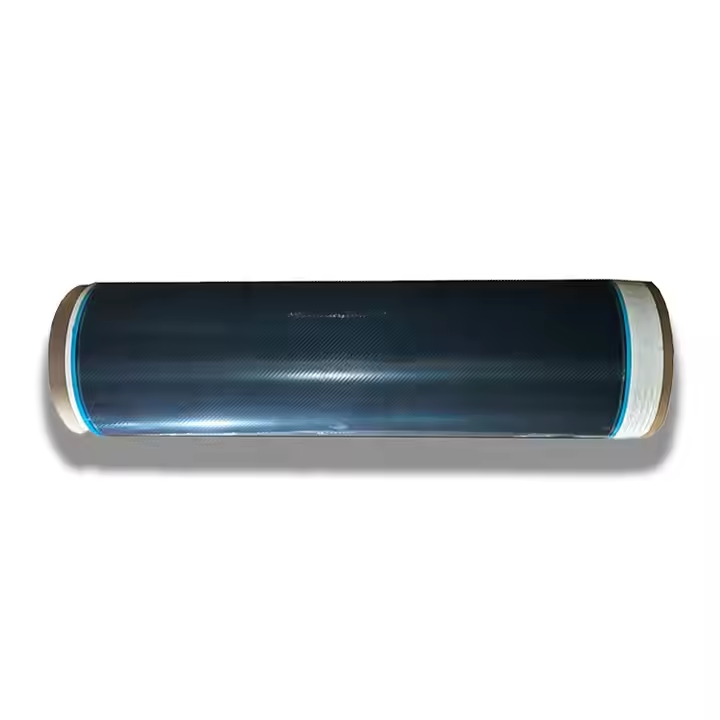
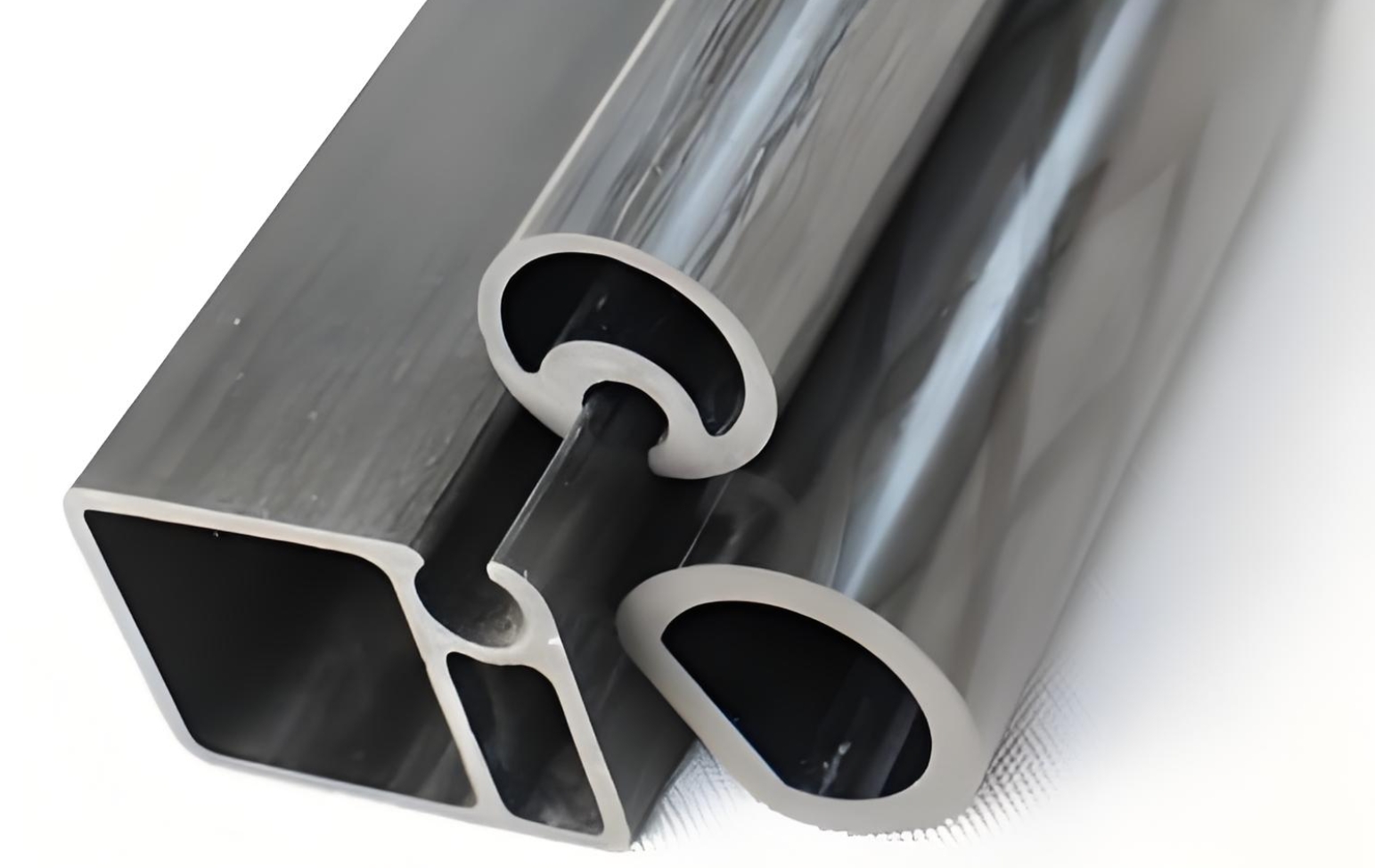
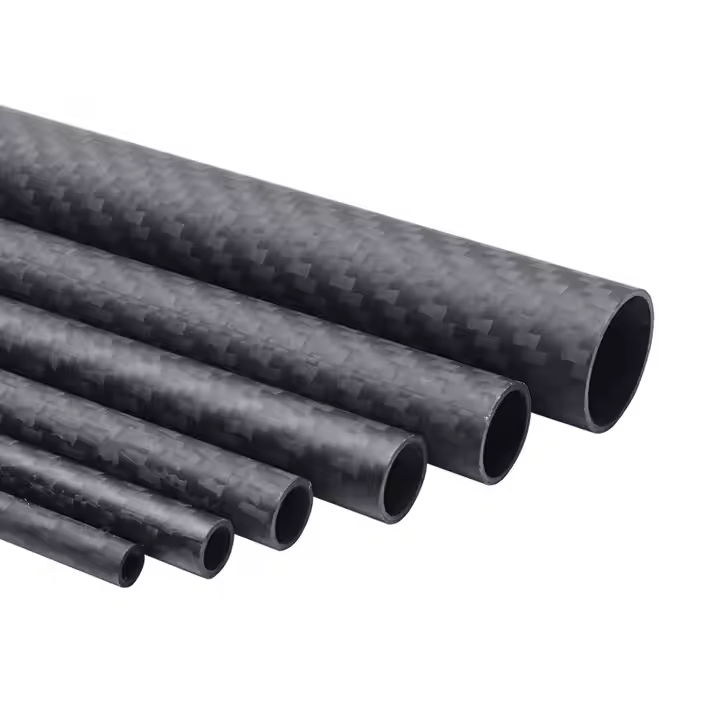
Discover top-tier products from Hangzhou Impact New Materials, a trusted supplier serving over 120 countries with cutting-edge carbon fiber solutions.
Ensuring Quality in Supply Chains
Choosing the Right Supplier
Selecting a reliable supplier involves verifying certifications like ISO 9001, which confirms a commitment to quality management systems. Requesting a Certificate of Analysis (COA) for material verification is also critical. Additionally, understanding the supplier’s production capabilities and lead times is essential for project planning.
Strict Quality Control Practices
Adhering to rigorous quality control measures such as non-destructive testing (NDT) and ongoing inspections ensures each carbon fiber component meets stringent industry standards. This process guarantees that the components perform reliably within their specified parameters, minimizing the risk of failure.
Best Practices for Handling and Storage
Proper handling and storage of carbon fiber components are crucial for maintaining their integrity and performance. These best practices include controlled environments to prevent moisture absorption and physical damage during transportation and storage.
For more comprehensive information on custom carbon fiber components and solutions tailored to your industry, visit Impact Materials for custom carbon fiber components solutions today.